Editorial team ·
Check whether the payment method changes the terms you are reading
Updated:
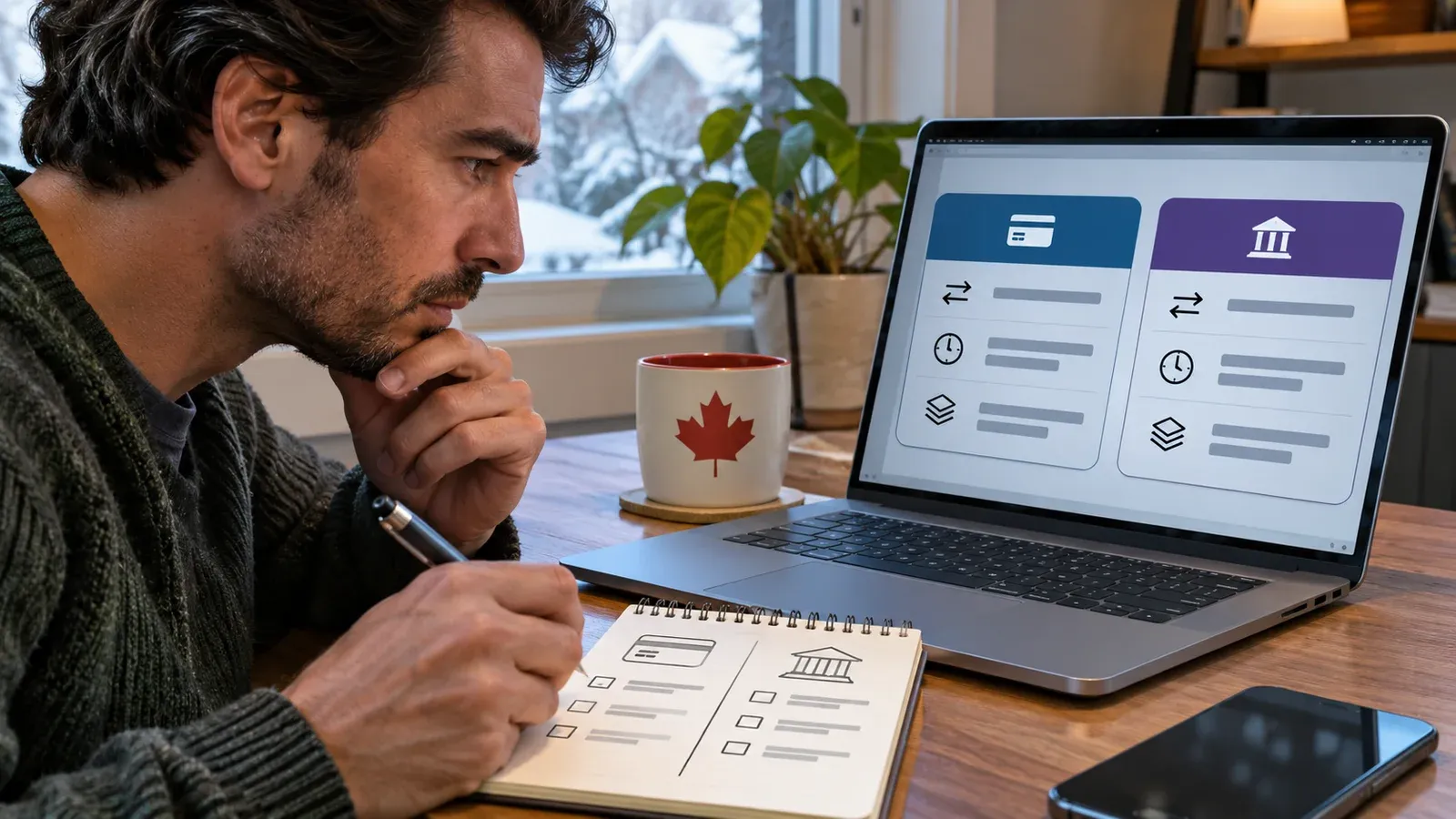
Two rows in a payment table give different timing notes. One applies to a request sent through a stated method. The other describes a different transfer route. Before borrowing either timing figure, check which method and operation the heading identifies.
Match the method and the operation
| Field | Method A | Method B |
|---|---|---|
| Transaction | Withdrawal | Withdrawal |
| Time basis | After approval | Read the separate timing note |
| Limit | Minimum stated | Maximum stated |
In the imagined document, Method A has a minimum for submissions and the timing note begins after approval. Method B has a separate ceiling and different wording about receipt. The row assigned to one method does not help interpret the other.
Check whether the policy refers to a deposit, withdrawal or another transaction. Some headings look similar across these sections. Use the same operation when comparing conditions.
If a payment provider has its own conditions, record those separately from the operator’s terms. A transfer delay or fee may be described by one party rather than the other.
Describe the difference in plain language and give the edition and region if relevant. Ask through a verified support channel if the method or a rule cannot be confirmed.
Keep the policy’s separate conditions attached to each row
- Read the full row labels
- Check method and transaction type.
- Find the definition of timing and limits.
- Confirm any extra conditions
- Keep operator and provider information separate.
- Flag any unknown rule before drawing a comparison.
Questions and answers
- Can I use deposit terms to estimate a withdrawal?
- Check the applicable withdrawal terms for the same method.
- Does a large limit say anything about fees?
- Read the fee and limit fields separately.
- Who can confirm the method currently in use?
- Use the account’s issued confirmation and the operator’s official support channel if needed.